A contact lens eye exam is not the same appointment as a routine eyeglasses check-up. A standard exam measures your prescription. A contact lens evaluation also looks at the curvature of your cornea, the quality and stability of your tear film, and how your eyes respond to a lens sitting directly on the surface.
For patients with astigmatism this matters even more. Astigmatism means the cornea isn’t perfectly round. That irregular curve can cause a standard soft lens to rotate on the eye and blur your vision. For dry eye patients, the same exam has to account for how quickly tears evaporate and whether a given lens material will make dryness worse by the end of the day.

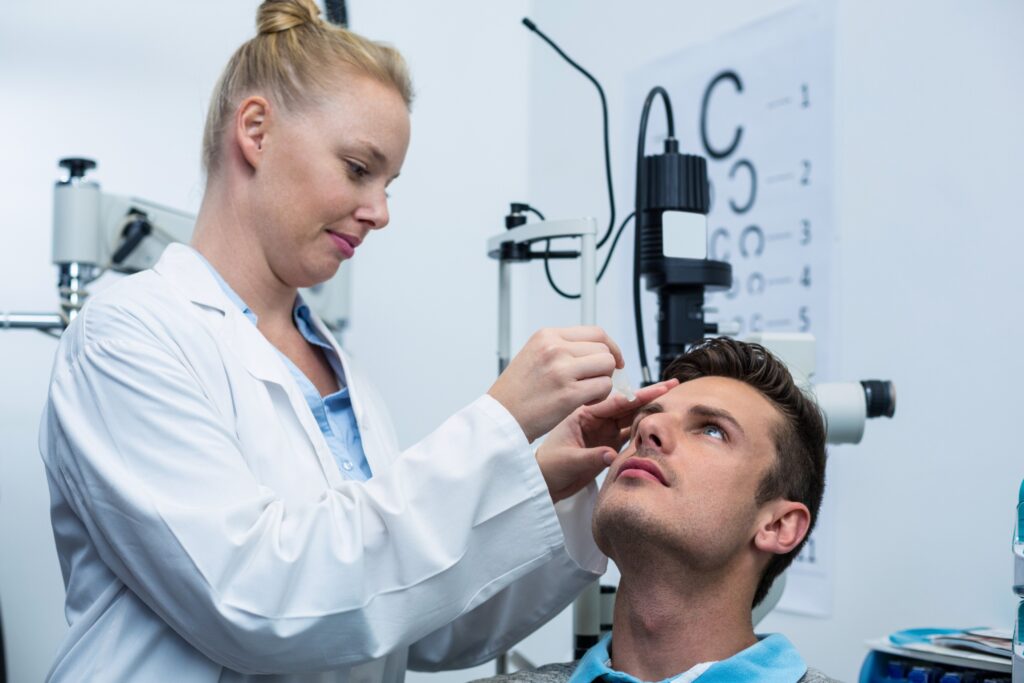

Fitting contacts for astigmatism and dry eye is not a one-size-fits-all process, and we don’t run it that way. Our approach is built on real measurements and real-world wear testing. If a lens isn’t working after your trial period, we adjust, whether that means a different material, a different design, or a change to your care routine.
We also take time to explain what’s happening with your eyes instead of handing you a box of lenses and sending you out. Patients who understand why a particular lens suits their eyes tend to stay comfortable longer and come back with fewer repeat problems.
If you’ve struggled with contacts before, or you’ve been told you’re "not a good candidate," a more detailed contact lens eye exam may turn up options you haven’t tried.
In most cases, yes. It usually takes a more detailed fitting and a lens material chosen to hold moisture while still correcting the irregular curvature. Your optometrist will confirm what’s appropriate after examining your eyes.
Rodriguez Optometry Clinics offers contact lens exams and fittings at our Davis location, including specialty fittings for astigmatism and dry eye.
Plan for a longer visit than a standard eye exam. Corneal mapping, tear film testing, and a trial fitting all add time beyond a basic vision check.
Many vision plans include an annual fitting allowance, but specialty fittings for astigmatism or dry eye may be covered differently than standard ones. Share your plan details with our team and we’ll check your benefits before the visit.
Not always. Some issues, particularly dryness-related ones, only show up after several hours of wear, which is why a follow-up check is built into the process.
An annual re-evaluation is standard. Corneal shape, tear production, and astigmatism can all shift gradually, and your prescription needs to keep up.
That’s a normal part of fitting. Trial lenses exist so we can test comfort and vision stability before finalizing anything, so adjustments are expected rather than a sign something went wrong.
A contact lens fitting fee is separate from a routine eye exam fee, because it includes additional testing, trial lenses, and follow-up visits. Fittings for astigmatism and dry eye generally fall into a specialty category, which is priced differently from a standard spherical fitting.
Many vision plans include an annual contact lens fitting allowance, though coverage varies by plan and by whether the fitting is classified as standard or specialty. We accept [list accepted vision plans], and our front desk team can verify your benefits before your appointment so there are no surprises on the day.