Contact Lens Exams

Contact Lens Exam and Fitting for Astigmatism and Dry Eye Patients in Davis, CA

If you have astigmatism, dry eyes, or both, finding contacts that stay comfortable past lunchtime can be frustrating. A standard fitting often isn’t enough. At Rodriguez Optometry Clinics in Davis, CA, our contact lens eye exam is built around these two conditions specifically, so you leave with lenses matched to your corneal shape, tear film, and daily routine instead of a generic size that "should" work.

Many patients in Davis and the surrounding Yolo County area assume they can’t wear contacts at all because of astigmatism or chronic dryness. In most cases that isn’t true. It usually means the earlier fitting process wasn’t detailed enough. Our team takes the extra time to measure, test, and adjust until we find a lens that stays clear, stable, and comfortable through a full day of work, class, or screen time.

Lens Options We May Discuss During Your Fitting

Not every patient needs the same solution. Depending on your results, we may consider.
We’ll go through the trade-offs of each option based on your own results rather than defaulting to one lens type for every patient. Availability of specific designs is confirmed at your visit.

Toric soft lenses

The most common choice for mild to moderate astigmatism

Rigid gas permeable (RGP) lenses

Often used for higher or irregular astigmatism

Silicone hydrogel lenses

Allow more oxygen to reach the cornea, which can help comfort

Daily disposable lenses

Frequently suited to dry eye patients, since a fresh lens each day limits the deposits and debris that worsen dryness

Scleral lenses

For irregular corneas or severe dryness, where the lens vaults over the cornea and holds a fluid reservoir

Who Performs Your Exam

Your fitting is handled by the Rodriguez Optometry Clinics team, made up of licensed optometrists practising in Davis, CA. Every doctor on our team holds a Doctor of Optometry (OD) degree and is licensed by the California State Board of Optometry.

Specialty fittings for astigmatism and ocular surface conditions are a regular part of our clinical work, not an occasional add-on. That day-to-day experience is what lets us pick up on the small details, such as a toric lens rotating slightly on blink or a tear film breaking up earlier than it should, that decide whether a lens works for you over a full day.

Can You Wear Contacts With Astigmatism?

For most people, yes. Toric lenses are designed for astigmatism and need to stay in one rotational position on the eye to keep vision sharp. If the lens rotates even slightly, vision blurs or fluctuates. Getting this right takes careful measurement and usually a trial period to confirm the lens holds steady during blinking, screen work, and normal daily movement.

Higher or irregular astigmatism sometimes needs a rigid gas permeable design instead of a soft toric. That decision comes from your measurements, not from a guess. If your astigmatism falls outside standard soft lens parameters, we’ll tell you directly and walk through the alternatives available through our Specialty Contact Lenses service.

Can You Wear Contacts With Dry Eyes?

Often, yes, though the approach changes. Dry eye affects how a lens behaves over the course of a day. A lens that feels fine at 8 a.m. can turn scratchy by 3 p.m. if it doesn’t hold moisture well. Our contact lens eye test identifies whether dryness comes from insufficient tear production, poor tear quality, or environmental factors such as long screen hours and air conditioning. Each of those points toward a different lens material and replacement schedule.

If your dryness is significant, we may recommend treating the ocular surface first and fitting lenses afterward. Our Dry Eye Treatment options can be discussed during the same visit.

What Does a Contact Lens Eye Exam Include?

A contact lens eye exam is not the same appointment as a routine eyeglasses check-up. A standard exam measures your prescription. A contact lens evaluation also looks at the curvature of your cornea, the quality and stability of your tear film, and how your eyes respond to a lens sitting directly on the surface.

For patients with astigmatism this matters even more. Astigmatism means the cornea isn’t perfectly round. That irregular curve can cause a standard soft lens to rotate on the eye and blur your vision. For dry eye patients, the same exam has to account for how quickly tears evaporate and whether a given lens material will make dryness worse by the end of the day.

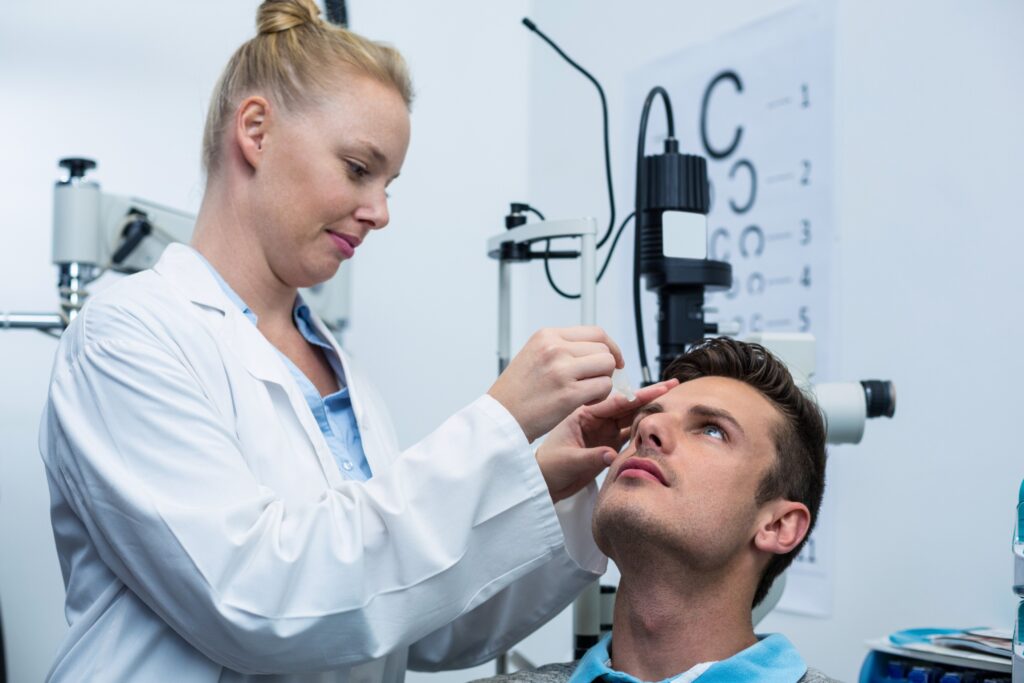
During your contact examination at our Davis clinic, we assess:

  • Corneal shape, curvature, and surface irregularities using corneal topography and keratometry
  • Tear volume and tear break-up time
  • Current symptoms such as grittiness, burning, redness, or end-of-day blur
  • Lens wear history, including past discomfort, rotation problems, or failed fittings
  • Base curve and diameter measurements needed to order the correct lens

Related reading: Comprehensive Eye Exams in Davis, CA and Dry Eye Treatment.

Benefits of a Thorough Contact Lens Fitting

A proper contact lens fitting isn’t only about comfort on day one. It affects how consistently you actually wear your lenses and supports your long-term eye health.
  • Sharper, more stable vision. Correctly fitted toric lenses reduce the blur caused by rotation, which is most noticeable while reading or working at a screen..
  • Less end-of-day dryness. Lens materials and replacement schedules can be matched to your tear film rather than chosen by default.
  • Fewer wasted trials. A fitting based on actual measurements beats guessing with over-the-counter options.
  • Lower risk of complications. Poorly fitting lenses are associated with corneal irritation and, in some cases, increased infection risk. A precise fit and a proper wear schedule help reduce that risk, and your optometrist will discuss what applies to your eyes specifically.

How the Process Works at Our Davis Optometry Clinic.

  1. Initial consultation. We go over your symptoms, lens history, and daily habits, including screen use, which affects both astigmatism correction and dry eye.
  2. Comprehensive contact lens eye exam. Corneal mapping, tear film assessment, and a refraction specific to contact lens correction.
  3. Lens selection and trial fitting. We choose candidate lenses and have you wear a trial pair in-office to check centration, movement, and rotation.
  4. Follow-up check. Because astigmatism and dry eye symptoms shift over the course of a day, we schedule a short follow-up to confirm the lens still performs after several hours of wear.
  5. Final fitting and instructions. Once comfort and vision are stable, we finalize your prescription and review cleaning, storage, and replacement guidelines.

Why Patients in Davis Choose Rodriguez Optometry Clinics.

Fitting contacts for astigmatism and dry eye is not a one-size-fits-all process, and we don’t run it that way. Our approach is built on real measurements and real-world wear testing. If a lens isn’t working after your trial period, we adjust, whether that means a different material, a different design, or a change to your care routine. We also take time to explain what’s happening with your eyes instead of handing you a box of lenses and sending you out. Patients who understand why a particular lens suits their eyes tend to stay comfortable longer and come back with fewer repeat problems.

If you’ve struggled with contacts before, or you’ve been told you’re "not a good candidate," a more detailed contact lens eye exam may turn up options you haven’t tried.

Frequently Asked Questions

Rodriguez Optometry Clinics offers contact lens exams and fittings at our Davis location, including specialty fittings for astigmatism and dry eye.

Plan for a longer visit than a standard eye exam. Corneal mapping, tear film testing, and a trial fitting all add time beyond a basic vision check.

Many vision plans include an annual fitting allowance, but specialty fittings for astigmatism or dry eye may be covered differently than standard ones. Share your plan details with our team and we’ll check your benefits before the visit.

Not always. Some issues, particularly dryness-related ones, only show up after several hours of wear, which is why a follow-up check is built into the process.

An annual re-evaluation is standard. Corneal shape, tear production, and astigmatism can all shift gradually, and your prescription needs to keep up.

That’s a normal part of fitting. Trial lenses exist so we can test comfort and vision stability before finalizing anything, so adjustments are expected rather than a sign something went wrong.

Cost and Insurance

A contact lens fitting fee is separate from a routine eye exam fee, because it includes additional testing, trial lenses, and follow-up visits. Fittings for astigmatism and dry eye generally fall into a specialty category, which is priced differently from a standard spherical fitting.

Many vision plans include an annual contact lens fitting allowance, though coverage varies by plan and by whether the fitting is classified as standard or specialty. We accept [list accepted vision plans], and our front desk team can verify your benefits before your appointment so there are no surprises on the day.